Simplifying Financial Operations for Active TRON Users
Context
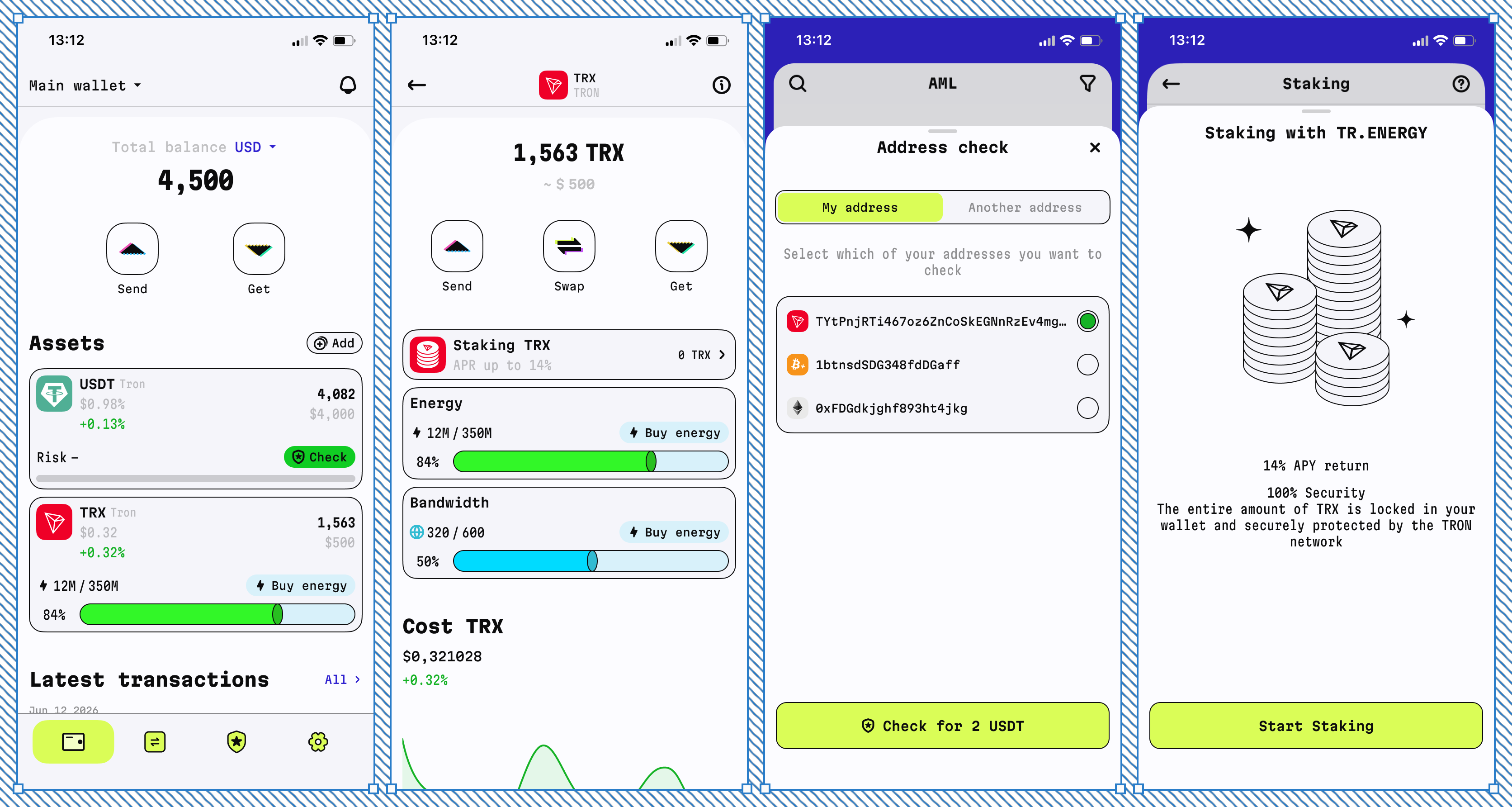
TR.ENERGY Wallet was designed for active participants of the TRON ecosystem who manage high transaction volumes and substantial crypto assets.
Unlike traditional wallets focused primarily on storing and transferring funds, these users face additional operational challenges:
- minimizing transaction costs.
- evaluating transaction risk.
- protecting wallet reputation.
- managing idle capital.
Most of these workflows are typically spread across multiple tools and services. Users often rely on separate applications for resource management, compliance checks, staking, and portfolio operations.
The goal was to bring these workflows into a single mobile experience while keeping complex blockchain concepts understandable and actionable.
Challenge
TRON provides powerful mechanisms for reducing transaction costs and managing assets, but many of them require users to understand technical concepts such as Energy, staking, and wallet reputation.
As the product evolved, the challenge shifted beyond building a wallet.
The challenge became:
How might we help users manage costs, risks, and capital without forcing them to become blockchain experts?
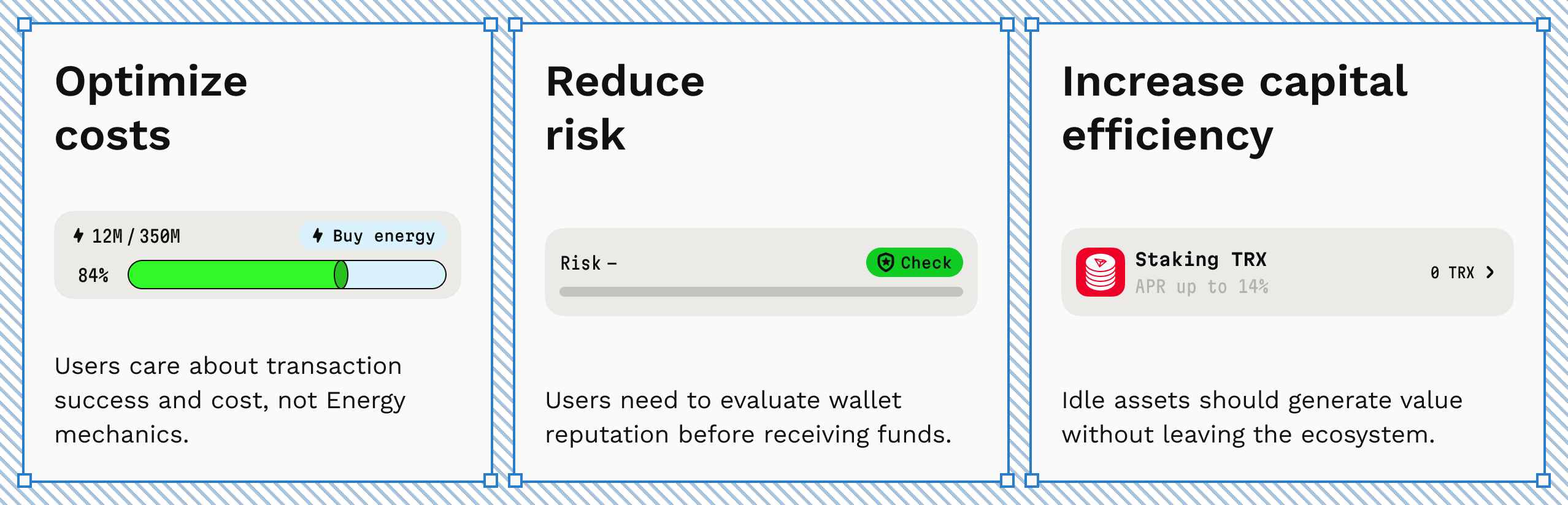
To answer this challenge, the product focused on three operational areas:
- transaction cost optimization.
- risk management.
- capital efficiency.
Operational scope
The product brought together 3 core operational areas within one mobile experience:
- transaction cost optimization through Energy management;
- risk management through AML verification and account separation;
- capital efficiency through staking.
These workflows were supported by a shared interaction model rather than separate, disconnected tools.
Key insights
Design principles
Make invisible information visible
Surface critical blockchain information directly where decisions happen.
Support proactive risk management
Help users identify and isolate risk before it affects primary assets.
Keep operational workflows connected
Reduce dependence on external services and fragmented experiences.
Preserve context during frequent actions
Allow users to complete common actions without losing sight of their current portfolio state.
Surface transaction costs before they become a problem
Problem
TRON transactions consume network resources known as Energy.
Without sufficient Energy, users must spend TRX to cover transaction fees. For users making frequent USDT transfers, inefficient resource management can significantly increase operational costs.
At the same time, Energy is a blockchain-specific concept that many users do not fully understand.
Solution
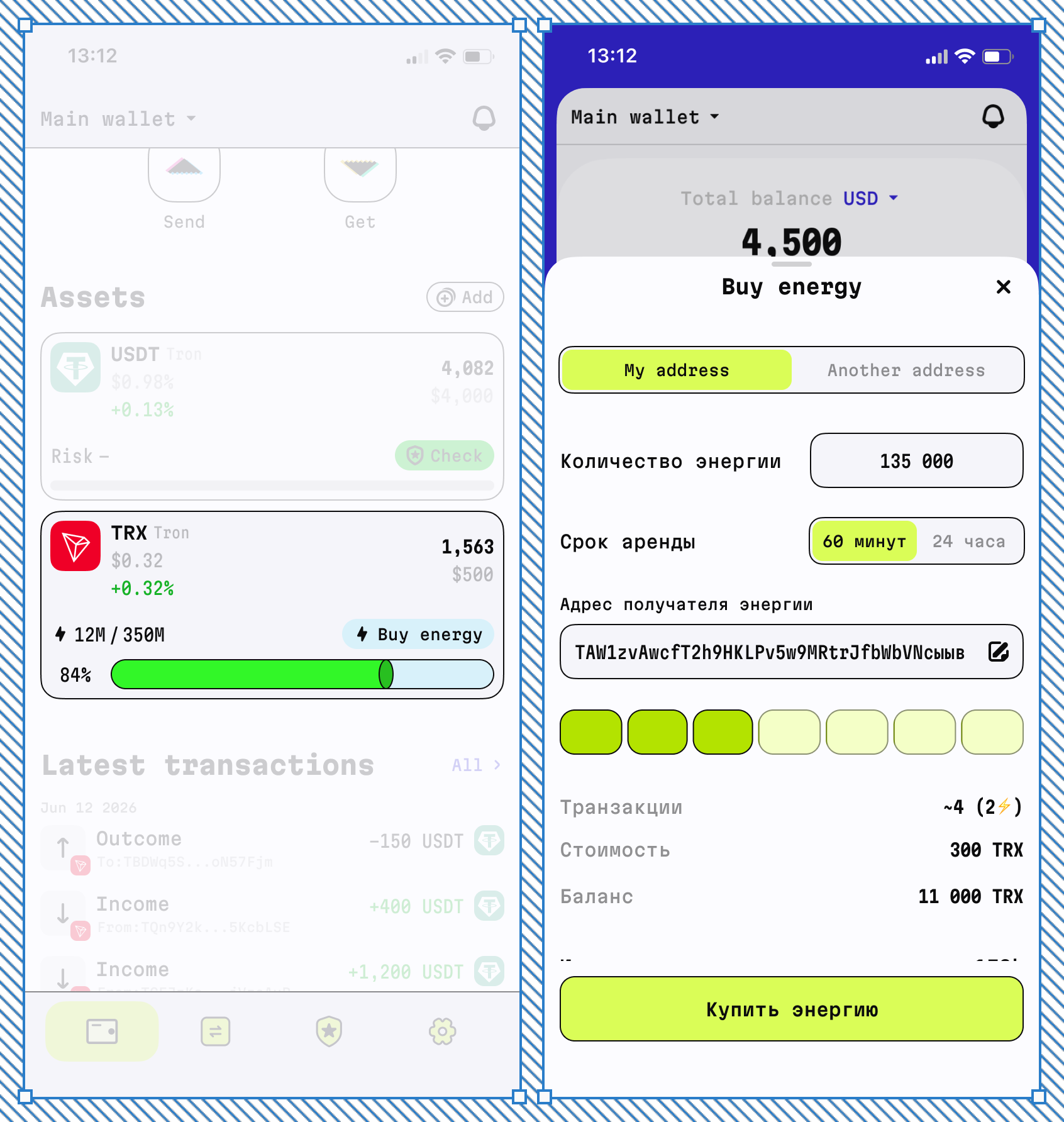
Energy availability was surfaced directly within the portfolio experience alongside token balances.
Users can immediately understand:
- available Energy.
- estimated transaction capacity.
- resource consumption status.
The wallet also provides an integrated Energy purchase workflow, allowing users to acquire additional resources without leaving the application.
Instead of navigating through external services or advanced blockchain settings, users can resolve transaction resource issues directly within the context of their assets.
Outcome
The wallet transforms a complex blockchain mechanism into an actionable operational tool, helping users reduce transaction costs while maintaining a streamlined workflow.
Turn compliance data into actionable decisions
Problem
For active crypto users, asset value is only part of the equation.
The reputation of incoming funds can affect future transactions, compliance requirements, and wallet credibility.
Users receiving transfers from unknown sources need a way to evaluate risk before integrating assets into their primary holdings.
Solution
The wallet introduces a proactive risk-management workflow.
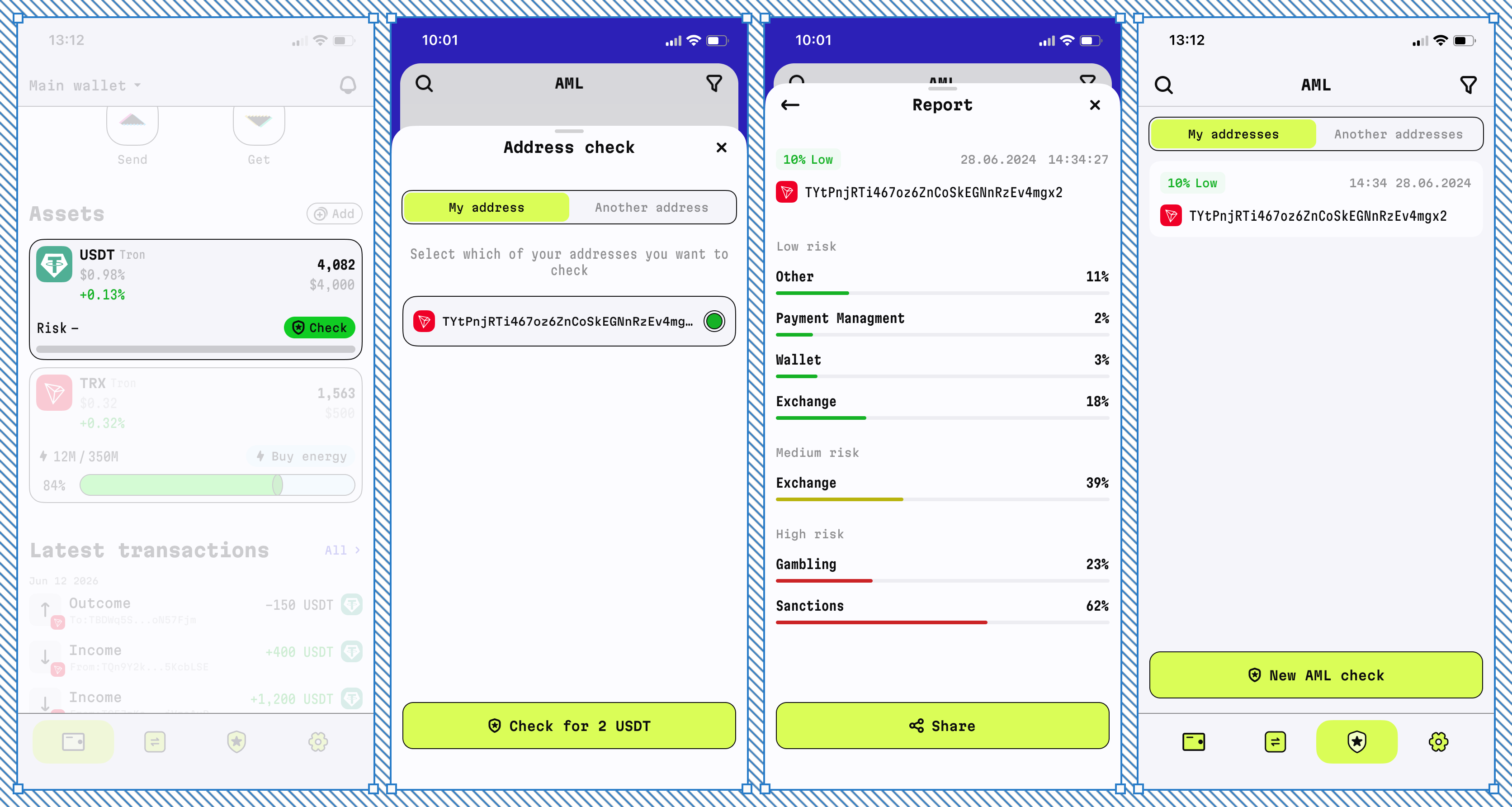
AML verification
Users could perform compliance checks across 3 different targets:
- their own wallets;
- existing assets;
- external wallet addresses.
This made risk assessment useful both for monitoring current holdings and evaluating funds before accepting or moving them.
Risk visibility
AML results are surfaced directly within asset cards using clear visual indicators and risk scores.
Users can identify potential issues without opening detailed reports.
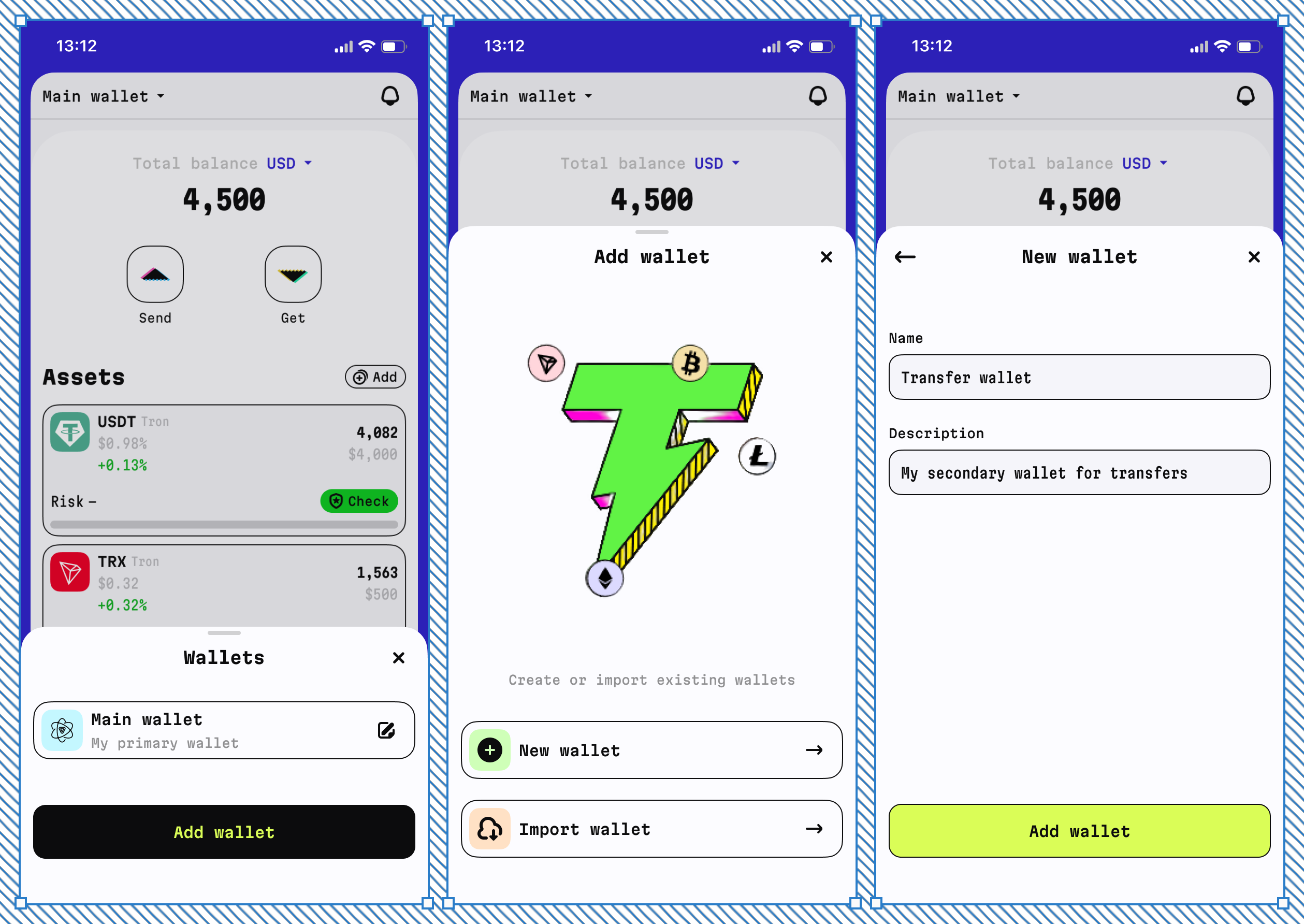
Transfer wallets
To further reduce risk exposure, the wallet supports multiple accounts.
A dedicated transfer wallet can be used to receive and verify incoming funds before moving them into primary holdings.
This allows users to isolate potentially risky transactions while keeping trusted assets separated.
Outcome
By combining AML verification with dedicated transfer wallets, the product supports a complete risk-management workflow—from evaluating external addresses before a transfer to safely integrating verified assets into long-term holdings.
Increase capital efficiency within the ecosystem
Problem
Many users maintain significant TRX balances to support transaction-heavy operations and reduce transaction costs through Energy purchases.
As a result, substantial amounts of capital often remain idle between transactions.
At the same time, users who want to generate yield are often forced to move assets to external staking platforms, introducing additional complexity and fragmenting their financial workflows.
The wallet needed a way to help users utilize idle capital without leaving the TR.ENERGY ecosystem.
Solution
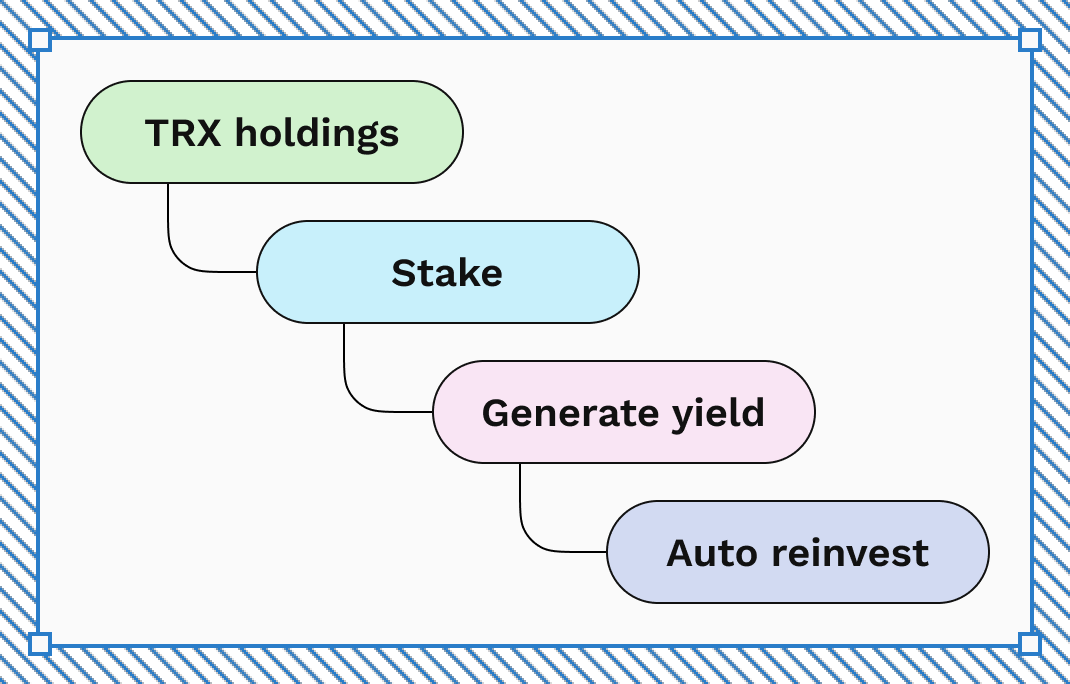
Staking capabilities were integrated directly into the wallet experience.
Users could manage 5 core staking actions without leaving the wallet:
- create staking positions;
- monitor active stakes;
- review earnings;
- unstake assets;
- enable automatic reward reinvestment.
This kept both operational activity and capital utilization inside the same product ecosystem.
Outcome
The wallet evolves beyond transaction management and becomes a broader asset-management platform, helping users generate additional value from assets already held within the product.
Creating a consistent interaction model
As the number of operational workflows increased, a unified interaction pattern became necessary.
Problem
As the product expanded, users needed access to an increasing number of contextual actions, settings, and supporting workflows.
Traditional navigation patterns would require frequent screen transitions and increase interaction cost.
Solution
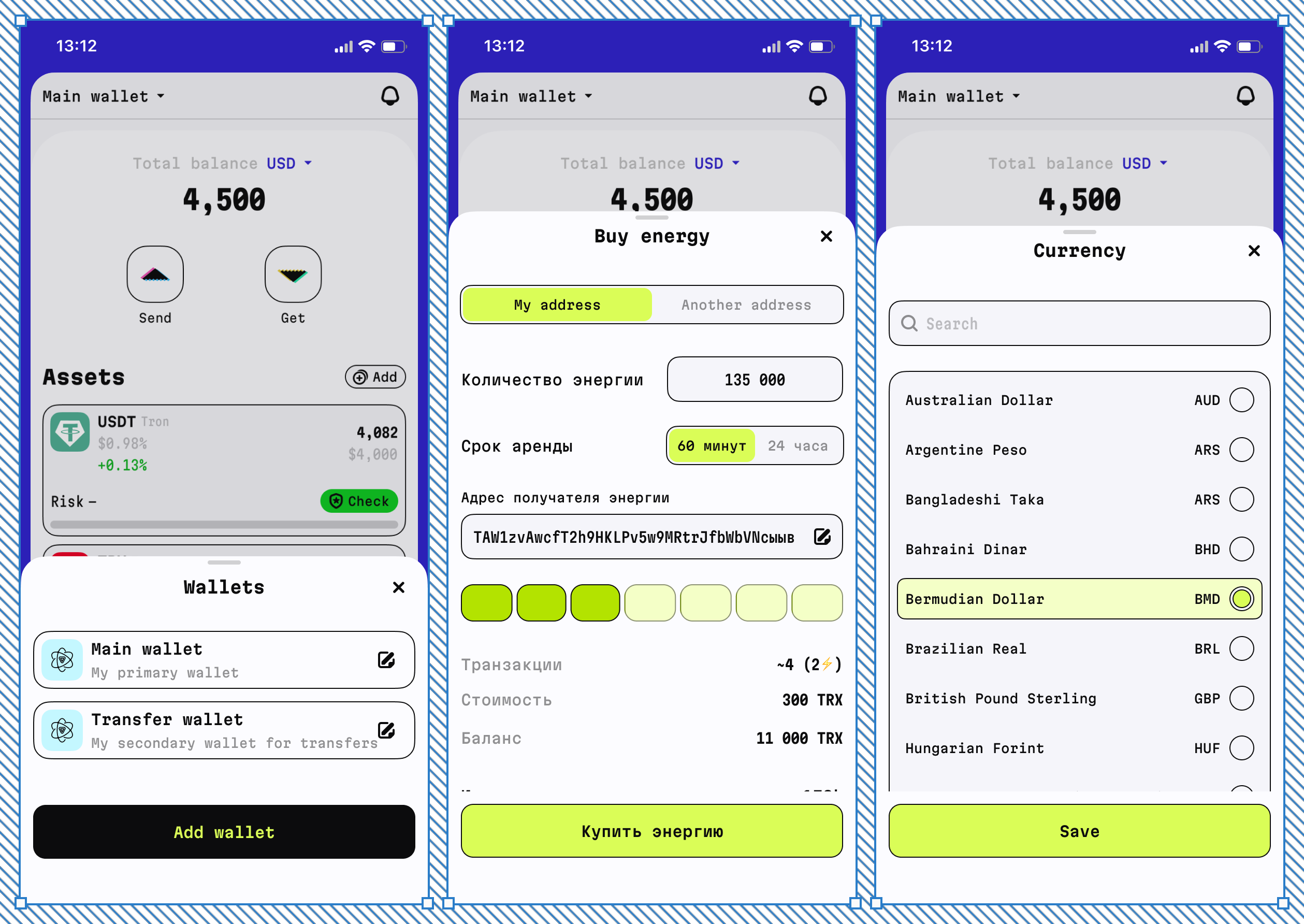
The reusable Bottom Sheet pattern supported at least 5 recurring interaction types across the product:
- Energy purchases;
- account management;
- currency preferences;
- contextual settings;
- lightweight operational workflows.
This reduced the need for repeated full-screen navigation and helped preserve portfolio context during frequent actions.
Outcome
The Bottom Sheet system became a consistent interaction foundation across the product, reducing navigation overhead while maintaining workflow continuity.
My role
As the Product Designer, I was responsible for designing key wallet experiences across the product, including Energy management, AML verification workflows, staking functionality, multi-account management, and the reusable interaction patterns used throughout the application.
My work focused on translating complex blockchain concepts into understandable mobile workflows, helping users manage transaction costs, evaluate risk, and utilize capital without requiring deep technical knowledge of the TRON ecosystem.
Outcome
TR.ENERGY evolved beyond a traditional crypto wallet into a financial operations platform for active TRON users.
The product combined:
- 3 core operational areas — transaction costs, risk management, and capital efficiency;
- AML checks across 3 target types;
- 5 core staking actions inside the wallet;
- a reusable Bottom Sheet system supporting at least 5 recurring interaction types;
- multi-account workflows that separated trusted and untrusted transaction flows.
The resulting experience helped users:
- manage Energy and transaction costs without leaving the wallet;
- evaluate asset reputation and incoming-fund risk;
- isolate potentially risky transactions through dedicated accounts;
- generate value from idle capital through staking;
- complete complex financial operations within one mobile experience.
By focusing on costs, risks, and capital efficiency, the wallet supports the operational realities of high-volume TRON participants while keeping advanced blockchain concepts accessible through a mobile-first experience.