Designing a scalable application architecture for complex workflows
Context
Platforma contains dialogs, side sheets, and analytical workspaces used across multiple applications.
As the platform evolved, header patterns diverged. Similar interfaces used different hierarchy levels, layouts, and action placement rules.
At the same time, new analytical tools such as the MSA Workspace introduced requirements that existing patterns could not support.
Challenge
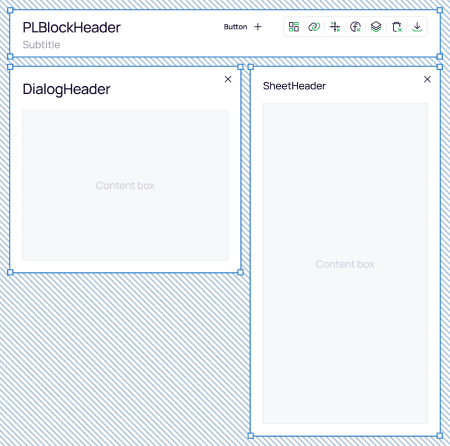
Create a reusable header architecture that supports dialogs, side sheets, and complex analytical workspaces while maintaining consistency and enabling future applications to build on the same foundation.
Design principles
Rather than creating one universal header, I focused on building a family of related patterns that share common rules while adapting to different contexts.
The system was guided by three principles:
- Consistency — users should recognize actions and navigation everywhere.
- Context awareness — dialogs, sheets, and workspaces require different levels of interaction.
- Scalability — future workflows should extend existing patterns instead of introducing new ones.
Key improvements
Header architecture instead of a single component
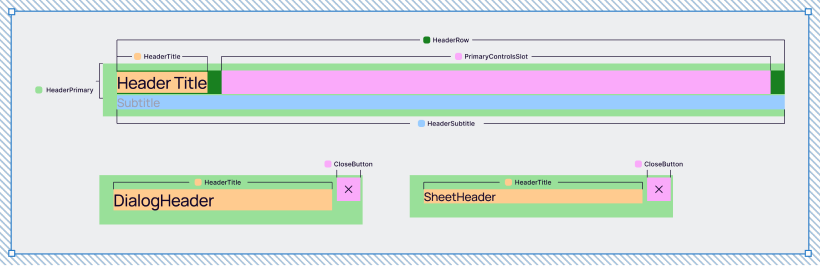
Rather than creating a universal header component, I introduced a family of specialized patterns designed for different interface contexts.
Dialog header
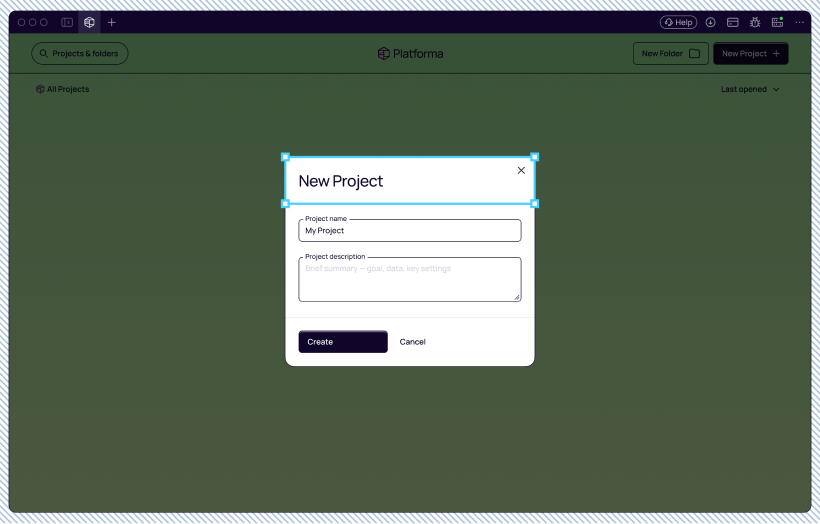
- Optimized for focused, short-lived workflows with a clear primary task and close action.
Sheet header
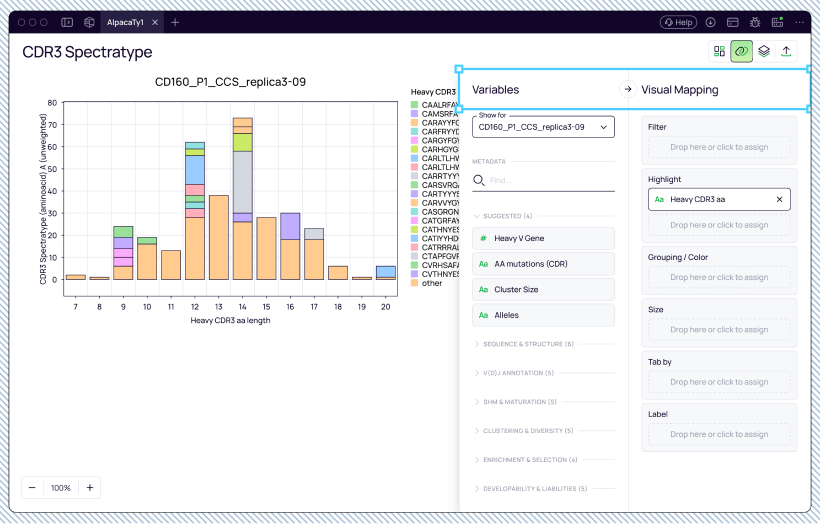
- Supports contextual editing while preserving visibility of the underlying workspace.
Workspace header
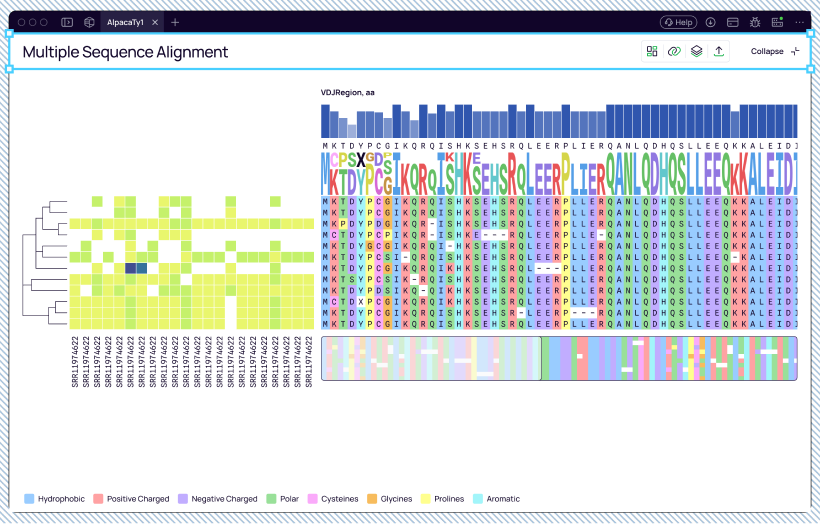
- Accommodates navigation, actions, controls, and workspace-specific tools within complex analytical environments.
Consistent hierarchy across the platform
Established hierarchy levels that communicate the scope and importance of each interface context.
- Workspace Header → H2, establishing the primary hierarchy level for analytical environments.
- Dialog Header → H2, representing a primary task context.
- Sheet Header → H3, indicating a subordinate context within a workspace.
Predictable action placement
Defined a structured header layout that organizes actions according to their role and importance.
The pattern includes:
- Title area
- Primary actions
- Action groups
- Workspace controls
- Responsive wrapping behavior
This reduced implementation ambiguity, improved consistency across applications, and ensured actions remain predictable regardless of context.

Extensible architecture for future workflows
Established hierarchy, action placement, and interaction patterns created a reusable foundation for future analytical workflows.
This reduced design debt, improved consistency, and accelerated the delivery of new product capabilities.

- A common header foundation scales from simple dialogs to complex analytical workspaces.
Implementation
- Defined component architecture
- Documented usage rules
- Established hierarchy guidelines
- Defined action placement rules
- Supported responsive behavior
- Worked with developers on implementation
My role
- Research and problem definition
- Header architecture design
- Component specification
- Responsive behavior
- Documentation and implementation guidelines
- Developer collaboration
Outcome
- Unified header patterns across dialogs, sheets, and workspaces
- Reduced need for one-off header solutions
- Established reusable hierarchy and action placement rules
- Enabled future analytical applications to build on a shared architecture